Digital Personal Data Protection and the WSO2 DPDP Accelerator
India's Digital Personal Data Protection Act, 2023 (DPDP Act) establishes a framework for processing digital personal data that recognises both an individual's right to protect personal data and the need to process it for lawful purposes. The WSO2 DPDP Accelerator extends WSO2 Identity Server with consent, complaint (grievance), audit, and event-notification capabilities that help an organization put parts of that framework into operation.
Disclaimer: This page is a product introduction, not legal advice or a statement of compliance. An organization remains responsible for determining how the Act, its commencement notifications, and applicable rules affect its processing activities.
What is the DPDP Act?
The DPDP Act applies to digital personal data processed in India, including data collected in non-digital form and digitised later. It also applies to processing outside India when that processing is connected with offering goods or services to Data Principals (the individuals the personal data relates to) in India. The Act excludes specified personal or domestic processing and certain personal data made publicly available by the Data Principal or by a person legally required to publish it.
The framework is built around several practical ideas:
- Process personal data for a lawful purpose, using consent or another use permitted by the Act.
- Give a clear notice and obtain consent that is free, specific, informed, unconditional, unambiguous, and expressed through clear affirmative action when consent is the basis for processing.
- Make withdrawing consent as easy as giving it and communicate the resulting change to the processors acting for the Data Fiduciary, the organization or person deciding why and how the data is processed.
- Keep personal data accurate where it is used to make decisions or disclosed to another Data Fiduciary, apply reasonable security safeguards, and respond to personal-data breaches.
- Provide ways for Data Principals to exercise their rights and raise grievances.
The Act gives Data Principals rights to obtain specified information about processing, seek correction, completion, updating, or erasure, use grievance redressal, and nominate another individual to exercise their rights in the event of death or incapacity. It also places duties on Data Principals, such as not impersonating another person or submitting a false or frivolous grievance. The precise conditions and exceptions in the Act still apply to every right and obligation.
The Act's provisions commence in phases. Use the official commencement notification to check when a provision takes effect; this product guide does not define a compliance deadline.
Participants in the DPDP ecosystem

The diagram shows consent communicated through a Consent Manager, breach notification to the Board, and a complaint after exhausting grievance redressal. These relationships are described in sections 6, 8, and 13 of the Act. They describe the wider ecosystem; the accelerator does not submit complaints or breach notifications to the Board automatically.
| Participant | Role under the Act |
|---|---|
| Data Principal | The individual to whom the personal data relates. The definition includes a parent or lawful guardian acting for a child, and a lawful guardian acting for a person with disability. |
| Data Fiduciary | Determines the purpose and means of processing, alone or with others, and remains responsible for processing performed on its behalf. |
| Data Processor | Processes personal data on behalf of a Data Fiduciary. A Data Fiduciary may engage a processor under a valid contract. |
| Consent Manager | A person registered with the Data Protection Board of India that provides an accessible, transparent, and interoperable platform through which a Data Principal can give, manage, review, and withdraw consent. |
| Significant Data Fiduciary | A Data Fiduciary notified by the Central Government based on factors in the Act and subject to additional obligations. |
| Data Protection Board of India | The statutory body established under the Act to perform the functions assigned to it, including handling personal-data-breach intimations and complaints. |
The accelerator helps a Data Fiduciary provide consent-management experiences. Installing it does not register the organization or the product as a statutory Consent Manager.
Scenario: Digital Healthcare & Teleconsultation
Priya Sharma uses CarePulse, an online healthcare app, to book an urgent virtual consultation with a specialist, order prescribed medications, and decide whether she wants her health trends analyzed for wellness perks.
Data Principal - Priya Sharma (Patient)
- Reviews segregated notices: Reads distinct requests for medical consultation, prescription home delivery, and optional predictive health tips.
- Gives granular consent: Approves processing for her consult and prescription delivery, while explicitly ticking an opt-in box for weekly health insights.
- Exercises control: Later opens her privacy settings to withdraw permission for marketing and health trend profiling.
- Raises issues: Files a complaint via the portal when she mistakenly receives an unrequested promotional SMS after revoking consent.
Data Fiduciary - CarePulse Telehealth (The Healthcare Platform)
- Defines purposes and data needs: Determines why data is required (e.g., vitals for consultation vs. address for courier delivery).
- Captures & audits consent: Employs the WSO2 DPDP Accelerator to record Priya's affirmative choices and record consent status and snapshot audit history.
- Coordinates the ecosystem: Communicates relevant consent changes to downstream consumers.
- Maintains accountability: Ensures legal basis compliance and oversees internal grievance resolution.
Data Processor - MedExpress (Courier Partner) & CloudEngage (Marketing Vendor)
- Executes under contract: Processes Priya's delivery address (MedExpress) or email/phone (CloudEngage) strictly under CarePulse's instructions.
- Consumes lifecycle events: CloudEngage responds to consent changes and updates its active campaign pipeline.
Grievance Officer / DPO - CarePulse Compliance Desk (Internal Team)
- Investigates concerns: Receives Priya's grievance ticket regarding the rogue SMS via the DPDP grievance portal.
- Reviews audit history: Checks the consent timeline and confirms that CloudEngage had a delivery lag when processing the revocation event.
- Resolves & intimates: Closes the gap with the vendor, updates the ticket, and delivers an official resolution within mandated statutory timelines.
Data Protection Board of India (DPBI) - Statutory Regulatory Body
- Serves as final arbiter: Available as an escalation authority if Priya finds CarePulse's grievance response unsatisfactory or unfulfilled.
- Enforces accountability: Evaluates systemic non-compliance or data breaches reported by either Principals or the Fiduciary.
WSO2 Identity Server and the WSO2 DPDP Accelerator
WSO2 Identity Server provides the identity, authentication, authorization, and core consent foundation, including APIs for purposes, data elements, and consent records. See Identity Server consent management. The WSO2 DPDP Accelerator extends that foundation with DPDP-focused consent management, audit, grievance handling, and lifecycle event capabilities that help organizations operationalize DPDP compliance.

How the WSO2 DPDP Accelerator helps
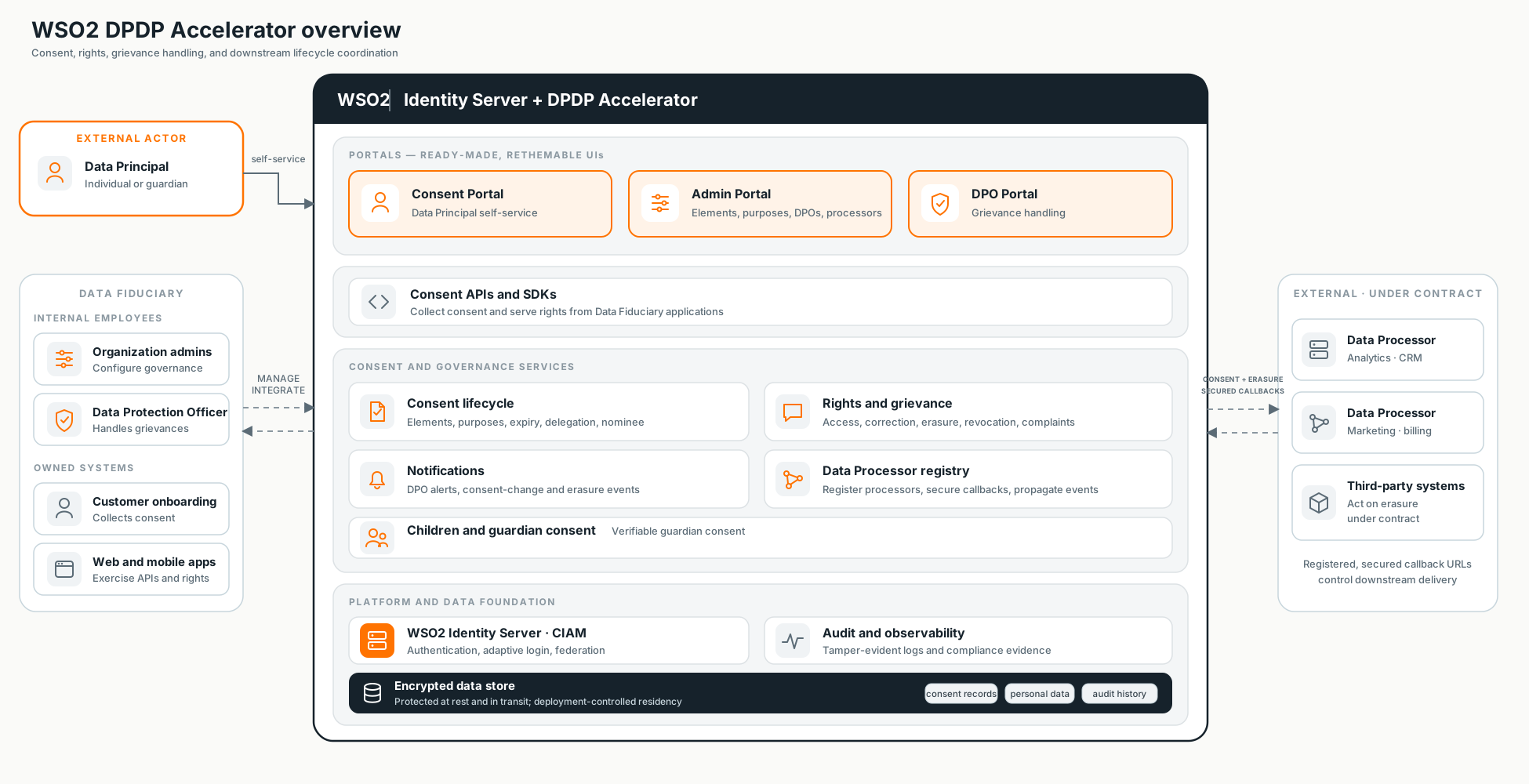
The accelerator runs with WSO2 Identity Server and provides a tenant-aware Consent Portal plus supporting services.
| Operational need | Accelerator capability |
|---|---|
| Define why data is requested | Administrators maintain a reusable list of purposes and data elements, called the catalog, to describe what data is requested and why. |
| Capture and manage consent | Data Principals can view and manage their own consents, while authorized administrators can manage tenant-wide consent records. |
| Demonstrate consent history | Status audit and snapshot history preserve the recorded evolution of a consent for authorized review. |
| Provide a grievance channel | Data Principals can submit and track complaints; DPO and administrator views support assignment, messages, attachments, status changes, and due-date tracking. |
| Propagate lifecycle changes | Event Notification records consent and user lifecycle events and supports webhook or polling subscriptions for downstream consumers. |
| Separate responsibilities | Tenant roles distinguish personal history and complaint self-service, complaint handling, and broader portal administration. Dedicated integration roles can be created with narrower scopes. |
| Support accessible notices | The portal interface supports English and the languages listed in the Eighth Schedule to the Constitution; purpose and data-element descriptions can be localized separately. |
| Support account lifecycle actions | An authorized user can request self-service account deletion, and a lifecycle event can notify configured receivers. |
The accelerator also publishes lifecycle events for configured downstream systems, which can receive them through webhook or polling subscriptions.
Start using the accelerator
- Quickstart: install and try the solution locally with the default embedded H2 databases, then verify portal access.
- Install and Set Up: configure external databases, JDBC drivers, datasources, schemas, and migrations before starting the server.
- Configuration Guide: configure provisioning, roles, email, and optional runtime features after installation.